The crack in the brick gets the photograph. The leak that actually costs money is usually above the ceiling: a valley iron that has rusted through, a box gutter that cannot overflow safely, a downpipe that charges a buried line and weeps into the trench, a tile roof whose pointing blew off two summers ago. Australian houses are wet from the top more often than they are wet from the ground. A pre-purchase inspection that treats the roof as a colour note has missed the main event.
This is a guide to what a visual inspector can usefully say about tiles, metal, gutters, fascias and stormwater, and what they cannot. It belongs with our defects and construction reporting. It is not a roofing specification, and it is not legal or financial advice. For the wider brief of a standard inspection, see what a pre-purchase building inspection covers.
Tile roofs: pointing, valleys and the broken one you cannot see
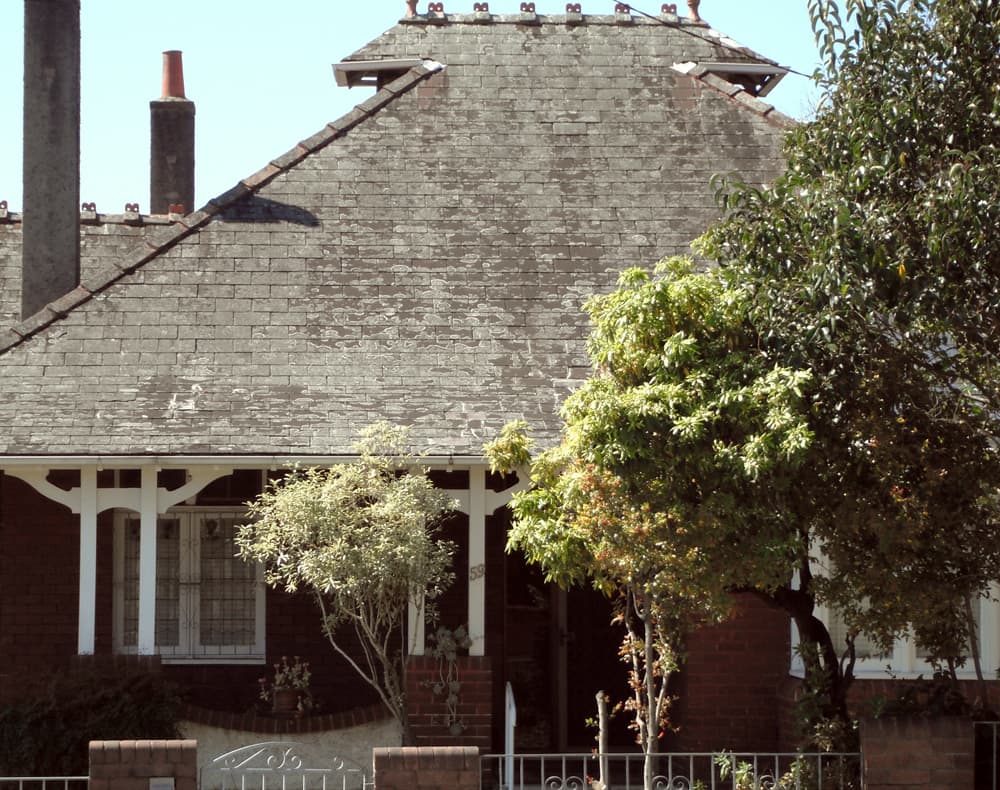
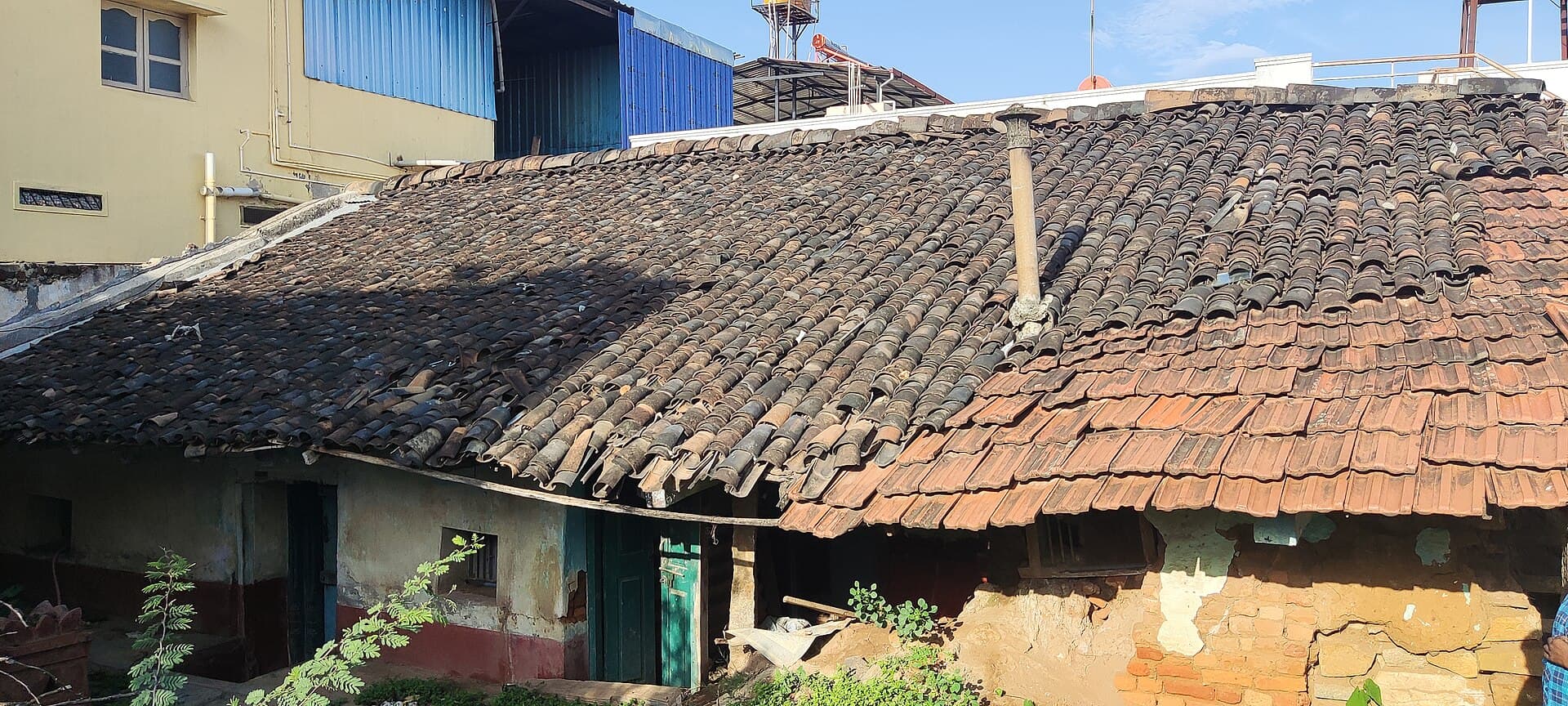
Concrete and terracotta tiles still cover a large share of older Australian suburbs. They fail in ordinary ways. Ridge and hip pointing — the mortar that beds the capping — cracks, slips and disappears. Once the water can get under the cap, it runs down the tiling batten and into the ceiling space. Broken tiles, especially on the pitch that faces the weather, let the same water in more directly. An inspector looking from a hatch will see daylight, staining on the sarking, and sometimes the tile that has slid.
Valleys are the honest weak point. Older houses used galvanised valley irons. They rust from the back, where no one looks, and they rust at the splash line. A rusted valley is a slow, expensive leak: it stains the ceiling below the hip, wets the wall plate, and can feed a window head for years. Newer valleys in Colorbond or similar last longer and still fail at laps and at debris dams from the last gum tree.
Sarking — the membrane under the tile — is the quiet difference between a roof that drips into a bedroom and a roof that drips onto a plastic sheet and then, eventually, into a bedroom. Older sarking goes brittle. Some roofs never had it. An inspector who can get their head into the roof space can say whether sarking is present, whether it is torn, and whether it is stained in a pattern that matches the valleys and the hips. They cannot re-tile the roof from that observation.
Flashings at abutments, chimneys and roof-to-wall junctions do the rest of the work. Lead that has perished, cement fillets that have shrunk, and over-flashed walls that dump water behind the brick skin are all in the visual set. So is the solar array that was fixed through the tile without a thought for the hole.
Metal roofs: screws, laps and the coastal problem
Corrugated iron is an Australian cliché because it works. Zincalume and Colorbond sheets, and the older galvanised profiles, cover everything from a Queenslander to a 1990s project home. They fail at fixings and at edges. Screws back out. Washers perish. Laps that face the weather on a low pitch can drive rain uphill. Gutters that sit hard against the sheet hold wet debris against the cut edge and start the rust.
Coastal houses add salt. The first rust is often at cut ends, at the screws on the western pitch, and in the gutter that no one cleans because it sits behind a parapet. An inspector looking from the ground will see the colour of the sheet, the line of the ridges, and the rust at the gutter. An inspector who can see the underside from a hatch will see the screws that missed the batten and the condensation stains that are not a leak.
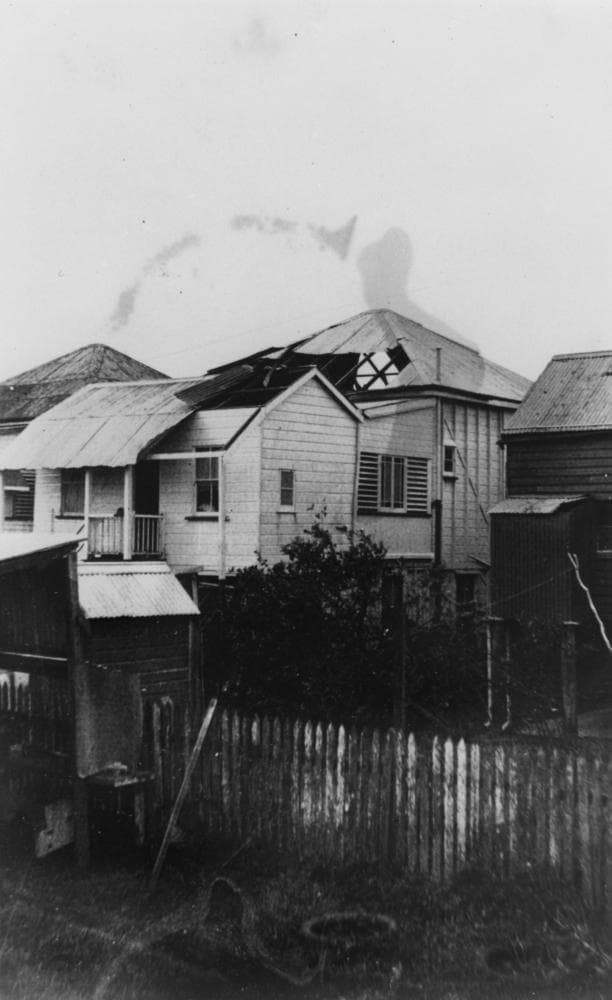
Cyclone country is a different brief. In the northern wind regions the question is not only whether the roof keeps the rain out, but whether it is still tied to the house. Screw type, screw pattern, and the connection from roof through wall to footing matter. A visual inspector on a pre-purchase job will look for obviously under-fixed sheets, lifted edges and missing straps. They will not certify the house for the next cyclone. That work sits in our cyclone-country roofs and tying-down reporting, and it is specialist when it needs to be.
A metal roof that looks tidy from the street can still be a bag of tired screws. The interesting view is the one from the hatch, on a day you are allowed to take it.
Gutters, fascias and the overflow you cannot see from the living room
Gutters are where roofs become plumbing. Leaf-filled gutters overflow into the eaves and the cavity. Back-falling gutters hold water and rust. Spike-and-ferrule fixings on older timber fascias pull out and drop the gutter away from the tile edge, so the water misses the gutter entirely. Fascias themselves rot at the joints and at the stop-ends. On a dry inspection day the only evidence may be the stain on the barge and the soft timber under the paint.
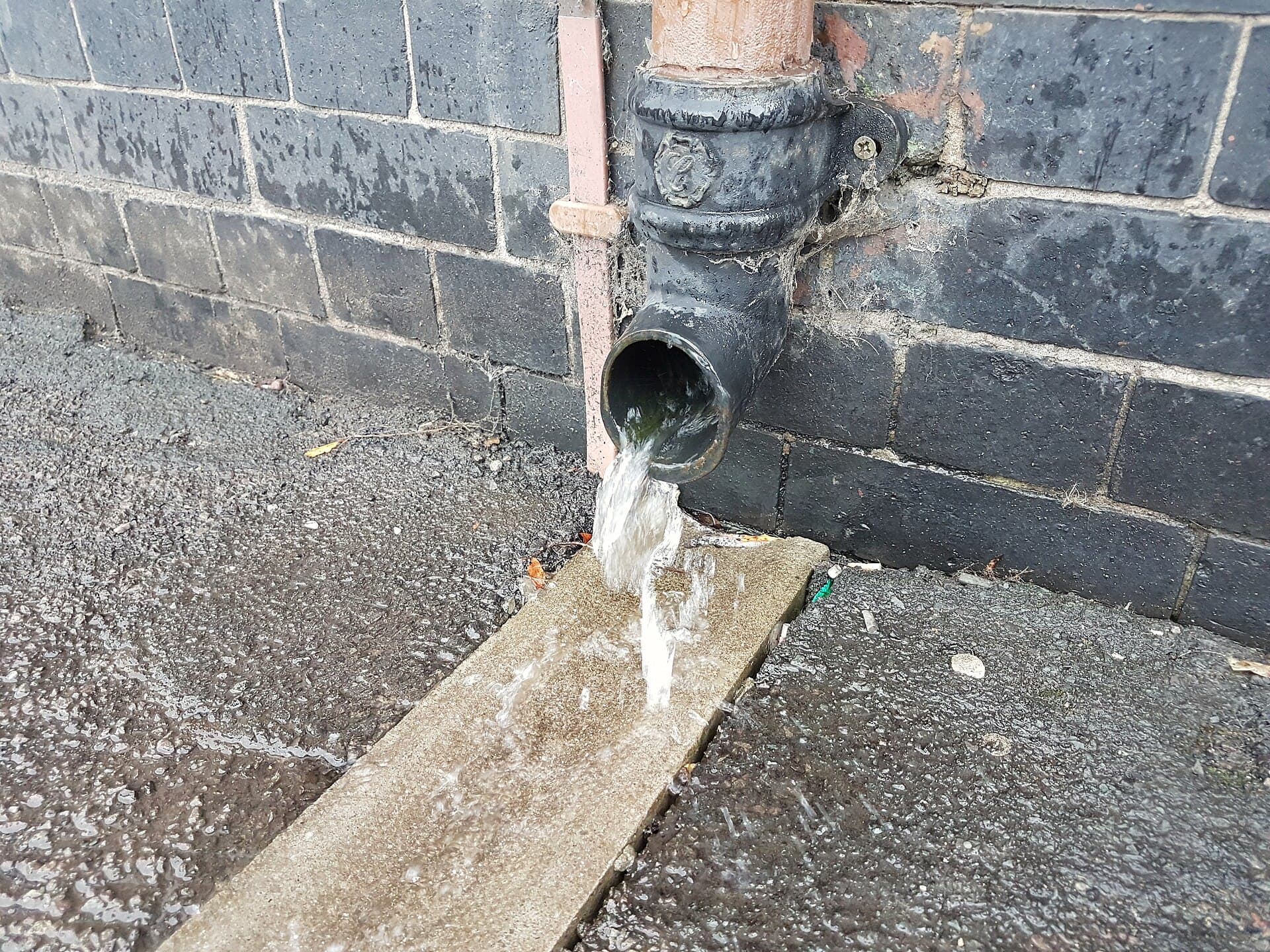
Downpipes should take that water somewhere useful. They should be fixed, they should not be crushed behind a water tank, and they should not discharge onto a path that runs under the house. A downpipe that stops ten millimetres above a blocked grate is a downpipe that will flood the corner of the slab in the next storm. Inspectors pour a little water if they can, or they watch the next cloud. They also look for the downpipe that was never connected after a renovation.
Overflow is the detail that separates a nuisance from a ceiling collapse. Eaves gutters need a way to spill that is not through the cornice. Box gutters — the square, hidden gutters that sit between two roof pitches or behind a parapet — need a dedicated overflow that can run if the outlet chokes. Older houses and many apartments were built as if the outlet would never choke. The first summer storm after the paperbarks drop their bark is the test. Inspectors look for rust at the box-gutter outlet, for a low point that holds water, and for ceiling stains in the rooms below. They cannot sit on the roof through a storm.
Charged lines, free-flowing lines and the legal point of discharge
Stormwater is the part of the house that leaves the block. The design idea is simple: roof water and, on some sites, surface water go to a legal point of discharge — often the street channel, a council pit, or an easement pit — without wetting the footings or the neighbour.
Practice is messier. Some systems are free-flowing: the pipe falls all the way, and water only sits in it during a storm. Some are charged: part of the line runs full because the outlet is higher, or because someone ran a rising line under a driveway to avoid a slab. A pinhole in a charged line is a permanent leak. The trench stays wet. The clay on one side of the house swells. The crack appears two summers later and everyone talks about the soil.
Dispersal systems — soakage pits, rubble drains, level spreaders — are common on older blocks and on sites that never had a street pit. They can work on sandy ground. On clay they can be a slow-motion wetting of the footing. An inspector who sees downpipes disappearing into the garden with no obvious outlet will say so. They will not dye-test the line unless that was separately commissioned.
Connection to the street is not automatically better. A crushed pipe under the nature strip, a charged kerb adaptor, or a system that backflows when the gutter runs a banker will wet the front of the house. Flood-affected properties make this worse: a house can be dry in ordinary rain and wet when the street cannot take the water. The inspection notes what it can see. It does not map the catchment.
Box gutters on houses and apartments
Box gutters deserve their own paragraph because they fail expensively. On an older house the box gutter is often a galvanised channel between two tiles pitches, with a single outlet and no overflow. Leaves sit in it. The soldered joint opens. The water goes into the ceiling space over the hallway — the one room everyone walks through on auction day.
On apartments the box gutter is usually common property, sitting behind a parapet on a concrete roof or on a metal tray. The lot inspection may see the stain on the soffit of a balcony or in a top-floor cornice. It will not see the gutter. That is a strata and common-property problem, and it is one of the reasons a lot inspection and a records inspection need to be read together.
Rusted valley irons belong in the same family. They are not box gutters, but they do the same work in a different geometry, and they rust in the same silence. Replacement means lifting tiles, and the cost surprises people who thought a roof “looked fine from the street”.
What the inspector can actually do in two hours
A standard inspection is not a roof report. The inspector will try to view the cover from the ground, from upper windows, from a balcony, and from a roof hatch if there is one and if it is safe. They will look at gutters and fascias from a ladder if the agreement and the conditions allow. They will look at downpipes, grates and the visible stormwater run. They will look at ceiling stains, cornice damage and the smell of a wet roof space.
They will not usually walk a brittle tile roof. They will not open a sealed parapet. They will not CCTV the stormwater unless you paid for that. They will not certify that the system meets the current plumbing code. The report should say how the roof was viewed and what that view could not include. “Roof cover not accessed” is a sentence buyers skip and should not.
The useful comments are concrete. Those sentences can be priced. “Roof in fair condition for age” cannot. Examples that belong in a report:
- pointing missing on the front hip
- valley iron rusted at the south-west junction
- gutter back-falling to the stop-end, or a downpipe disconnected at the rear
- box gutter outlet rusted, overflow not evident
- stormwater discharging to the garden at a corner of the slab
How to read the roof and water comments
Read the limitations first. If the roof was not accessed, treat every cheerful sentence about the tiles as a sentence about the tiles that could be seen. Then read the stains against the roof plan in your head: is the mark under a valley, under a box gutter, under a solar penetration, under a bathroom? Then read the stormwater. A dry, tidy garden against a downpipe that vanishes into clay is not a reassuring picture on a reactive site.
If the house is in a wind region, read the roof comments with the tying-down question in mind, not only the leak question. If the house has a history of flooding, read the stormwater comments as part of that history, not as a separate maintenance list.
Roofs and stormwater are unfashionable defects. They do not have the drama of a stepped crack or the folklore of rising damp. They are also the defects that, left alone, turn a habitable house into a mouldy one. The inspection that is worth the fee is the one that spent as long looking up as it did looking at the front wall.