Inspection reports are full of animals and metaphors that buyers do not meet anywhere else. White ants, borers, powder post, dry rot, carpenter ants, “old workings”, “conducive conditions”. The house is usually quieter than the vocabulary. This is a field guide to what those words mean on an Australian dwelling, and to the only distinction that changes a purchase: is the problem live, or is it historic damage sitting in timber that is now dry, treated, or simply old.
It is written for buyers and owners who have just been handed a pest and timber report, and for anyone trying to read a building report that has wandered into the same territory. It is not a taxonomic paper. Species names appear where they help you understand the next phone call.
Subterranean termites, the default Australian problem
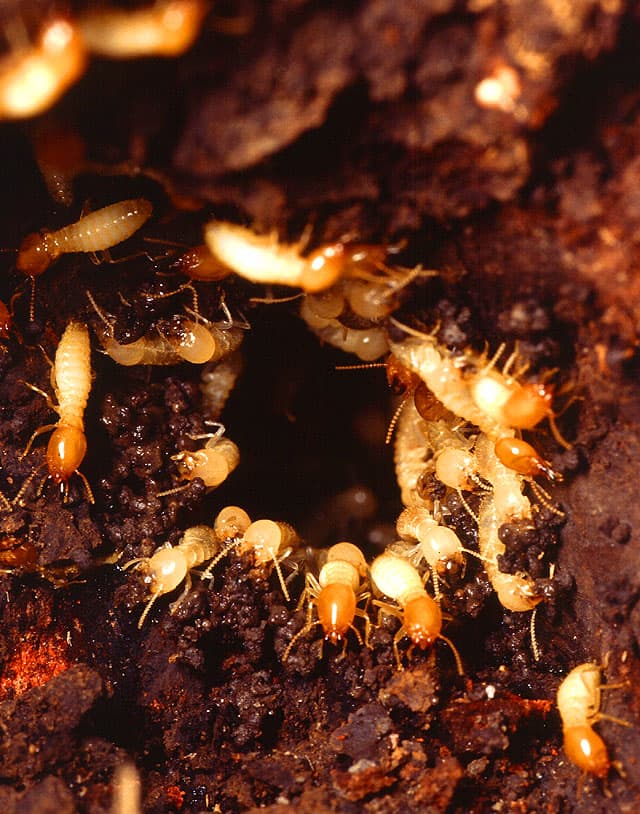
When an inspector in most of the country says termites, they mean subterranean termites: insects that nest in soil or in a tree, need a moisture relationship with the ground, and travel to the house. Coptotermes acinaciformis is the name that appears most often. Schedorhinotermes shows up in the north. Termite inspections in Australia covers the inspection method. Here the question is how the damage looks.
Subterranean termites eat from the inside. The paint film on a skirting can look intact while the timber behind it is galleries and clay. A probe goes in. A sounding tool rings dull. In a subfloor, you may see mudding on a stump or a scarred bearer with soil packed into the grain. In a slab house you may see nothing until a door bind or a kitchen kickboard collapses under a boot.
Live activity is suggested by pale insects in the workings (they die in the light and are not a show), by moist, dark mud, by a gallery that is still clean and used. Historic activity looks drier. The mud is brittle. The galleries are dusty. There may be a drill pattern from an old treatment. The inspector will still recommend that a builder say whether the remaining timber can do its job. Dead termites do not put the strength back.
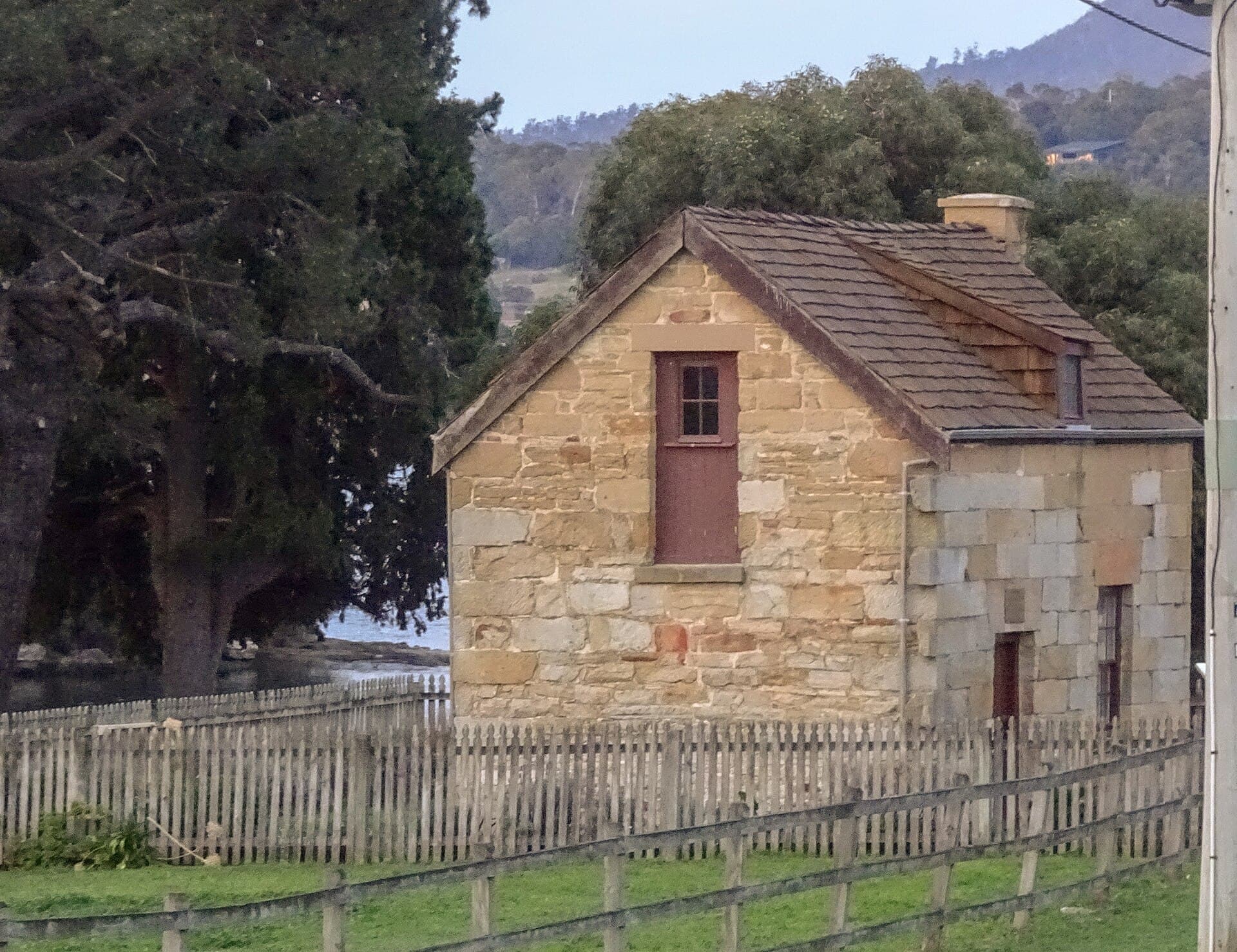
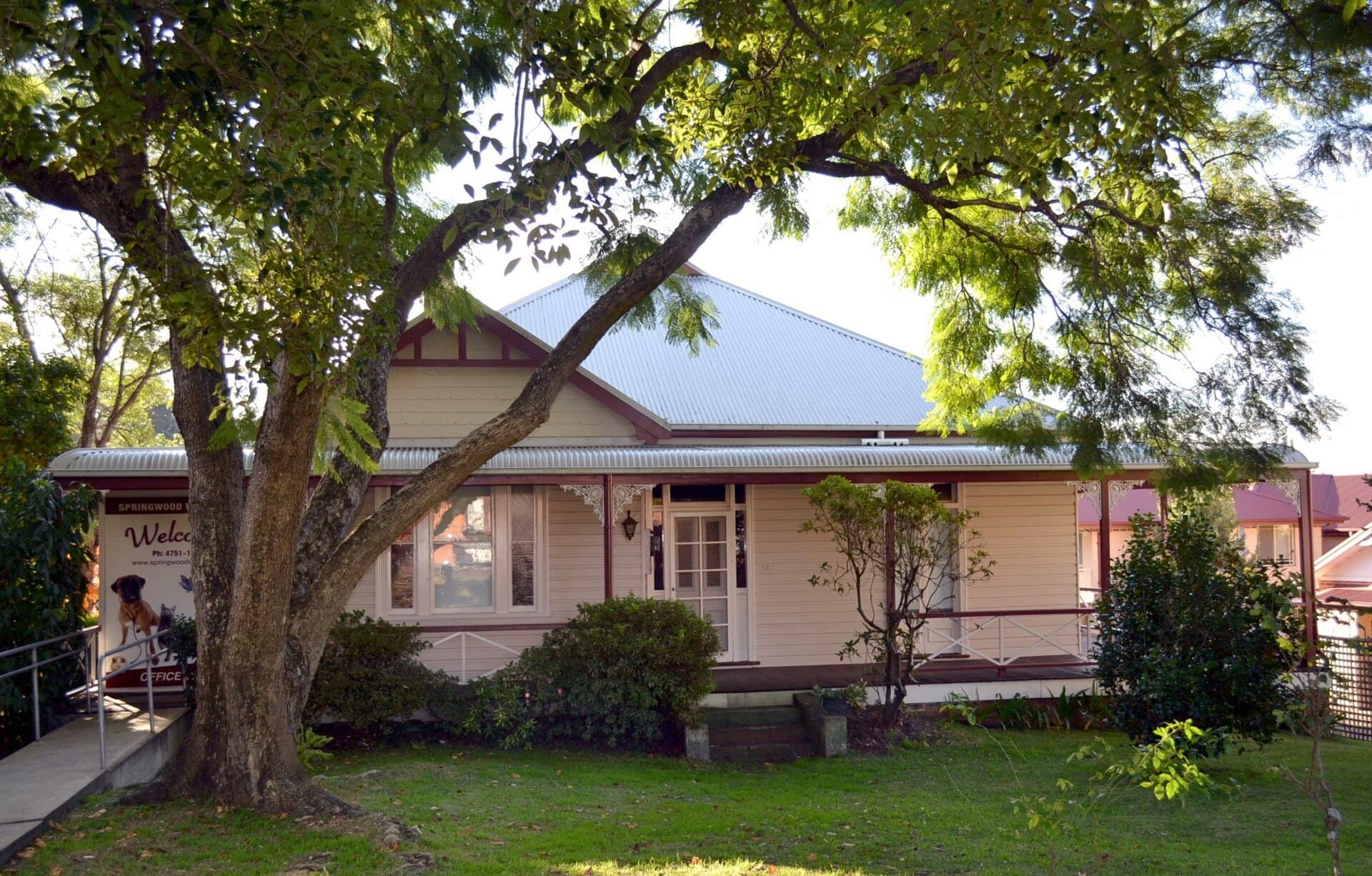
Weatherboard houses — the stock discussed in heritage houses and weatherboard by era — are generous to termites and to inspectors. There is a lot of timber, often close to soil, often on stumps that can be seen. A Federation weatherboard in the Blue Mountains, a Queenslander in New Farm, a Tasmanian cottage on stumps: the inspection is a conversation with the lowest metre of the building.
Drywood termites, a smaller, different problem
Drywood termites live in the timber they eat. They do not need a soil contact in the same way. They throw faecal pellets out of small holes. The damage can be in a window join, a piece of furniture, a hardwood lintel. They are not the usual explanation for a destroyed subfloor in Townsville. They are a reason not to call every hole in a window “Coptotermes”.
A visual inspection may find the pellets, the holes, and a hollow section of joinery. Treatment and the decision to replace the member are specialist questions. The buyer’s job is not to become that specialist. It is to stop the vendor, the agent and the cousin who once had “white ants” from collapsing three different insects into one quote.
Borers: lyctus, anobium, and the holes in the floorboards
Borers are beetles. Their larvae live in timber and leave exit holes and frass — a fine dust or a gritty powder — when they emerge. Two names dominate domestic reports.
Lyctus, the powderpost beetle, works in the sapwood of certain hardwoods. It is a common finding in older hardwood floors and in furniture. The sapwood can be peppered with small holes and a talc-like frass. Heartwood is typically less attractive. A floor that has lyctus in the sapwood edges is not necessarily about to fail as a structure. It may be an appearance and a maintenance item. It may also be historic: the sapwood has been eaten, the beetles have gone, and what remains is the durable part of the board.
Anobium, the furniture beetle, is the insect behind many “wormy” pine floors and joinery, especially in older, damper southern houses. Tasmania, Victoria and older New South Wales stock produce these reports. Active anobium wants moisture. A dry, heated house is a poorer habitat than a closed holiday cottage.
Inspectors try to tell lyctus from anobium from termite exit holes. The size of the hole, the type of frass, the species of timber, and whether galleries follow the grain or cut across it all help. Buyers do not need to win that argument on the day. They need the inspector to write which borer they think it is, whether they think it is active, and whether any structural member is involved. A fascia with old lyctus is a painting conversation. A structural pine joist with active anobium and high moisture is a building conversation.
Fungal decay and the dry-rot myth
Fungi eat timber that is wet enough, for long enough. The everyday names are wet rot and dry rot. The useful name is fungal decay.
Wet rot is the familiar softening of a window sill, a deck joist, a bottom plate, a weatherboard where a downpipe has leaked for years. The timber darkens, loses its ring, and a screwdriver ends the discussion. The cause is water. The fix is to stop the water, cut out what cannot be saved, and replace it with timber that can be kept dry, or with a detail that should have been there in the first place.
Dry rot, in popular speech, is decay that appears in timber that does not look soaking. The myth is that it is a special disease that travels through dry houses like a curse. The reality is that the fungus had moisture — a leak, a damp subfloor, a shower — and may have a growth habit that lets it move across masonry towards a food source. It is still a water problem. There is no treatment that makes sense while the waste pipe drips.
Inspectors should not use “dry rot” as a flourish. They should say where the timber is decayed, what is wetting it, and whether the member is structural. “Fungal decay to the bottom of the door jamb, associated with a failed shower hob. Jamb is soft to probe. Recommend plumber and carpenter. No live termite activity sighted at this location.” That is a usable paragraph.
Decay and termites travel together because both like the same wet corner. A report that finds both is not confused. The corner is busy.
Carpenter ants are not termites
Carpenter ants excavate timber to nest. They do not eat cellulose as food the way termites do. They appear in reports in some districts and cause the same first reaction: ants in the wood, the house is being eaten. The damage can still be structural if a nest is large. The biology and the treatment differ. An inspector who can tell a carpenter ant from a termite is worth the fee. An owner who treats carpenter ants with a termite baiting system is buying the wrong product.
If the report says “termite”, ask why. If it says “ant”, do not upgrade it in your head to Coptotermes because the internet uses the words interchangeably.
Weatherboard, hardwood stumps, decking
A few Australian details concentrate these problems.
Weatherboard walls near grade, especially where soil has been built up, give termites and decay a start. Paint that is intact is not a barrier to a subterranean colony coming from below. Look at the bottom boards, the corners, and the junction with a concrete path.
Hardwood stumps last a long time and still fail. Redgum and similar species check and weather. Ant caps sit on top, or they do not. A stump can be termite-damaged at ground line and look honest a foot higher. The inspector is in the subfloor for this reason. If they could not get in, you do not know the stumps.
Decking is a sacrificial system that owners treat as structure. Soft joists at the house junction, bearers in soil, and posts without separation from the ground produce decay first and termites second. A deck that is pulling away from the wall is a building-and-pest item and a fall hazard. It is also, often, unapproved work.
Verandahs on older houses are where all of the above meet: decorative timber, leaks at the roof junction, stumps, and a century of paint. Heritage fabric does not make the insects sentimental.
Historic and inactive versus live
This is the paragraph buyers reread.
Historic damage means the inspector saw galleries, holes, or replaced timber, and did not see evidence that an insect is using it now. Inactive means the same thing said about the colony. Live means they saw insects, fresh workings, or a pattern that is not consistent with an old, dry event.
The inspector can be wrong in both directions. A live colony can be quiet on a dry Tuesday. Old workings can sit next to a new gallery the inspector did not open. That is why limitations and reinspection intervals exist. It is also why “further invasive investigation” is a serious recommendation, not a hesitation.
When damage is historic, you still price the timber that is missing. A bearer that was eaten in 1998 does not grow back because the colony left. A builder or engineer tells you whether it needs splicing, replacing, or leaving alone. The pest question is whether anything is still feeding.
When activity is live, you have a management problem before you have a renovation problem. Treatment, then repair, is the usual order. Repair first can drive a colony further into the building or bury the evidence under new plasterboard.
What “further invasive investigation” means
It means someone will open the building.
Typical invasive steps:
- Lifting a small section of floor or lining beside a hollow skirting.
- Removing a kickboard or a bath panel.
- Cutting an inspection hatch in a plaster ceiling where staining meets a valley.
- Probing and, if needed, replacing a weatherboard to see the stud.
- Clearing the subfloor so a previously inaccessible bay can be crawled.
It is not a thermal-camera drive-by. Cameras are aids. They do not replace a hole in the right place.
Invasive work on a house you do not yet own needs the vendor’s written permission, a licensed person if the work requires one, and an agreement about making good. If the vendor refuses, the refusal is information. It belongs in the negotiation with the clause you actually have.
Invasive work is also how asbestos-era linings become a problem. A 1970s wet-area sheet that might contain asbestos should not be attacked with a hammer because someone wants to see termites. Sampling and a method are part of the investigation, not a later surprise.
State colour, because the timber changes
Queensland. Termites dominate the conversation. Decay in wet decks and in unventilated subfloors is the supporting act. Queenslanders show their structure if you are allowed under them.
New South Wales. Coastal termite pressure, lyctus in older hardwood floors, decay in mountain weatherboard, and a lot of historic damage in inner-city terraces that have been “done”.
Victoria. Anobium and decay in older pine, termites more often than the folklore allows, and verandahs that have been enclosed without anyone thinking about the timber in the dark.
Western Australia. Termites in unexpected brick houses; decay where irrigation meets timber; decks that were an afterthought.
South Australia. Decay and termites in the same damp story as rising damp, salt attack and slab-on-ground. Masonry does not end the timber conversation; it hides it.
Tasmania. Decay first, borers often, termites present. A mainland “white ant” panic is the wrong first reaction to a soft verandah post. Water is usually the first reaction.
ACT. Cold, closed subfloors, and buyers in a hurry. Decay and the occasional termite finding both need time you may not have after an auction.
Northern Territory. Termites as a management system, not a scandal. Invasive investigation is sometimes the only way to see a steel-and-timber junction that the insects have already found.
A reading checklist for the pest page
- Separate the insects: subterranean termite, drywood, borer, carpenter ant. If the report will not, ask.
- Separate live, historic, and “cannot tell”.
- Put a water story next to every decay finding. If there is no water story, the report is unfinished.
- Decide whether any damaged member is structural. Skirtings are not bearers.
- Treat “further invasive investigation” as a fork in the purchase, not as optional colour.
- Do not upgrade every hole to Coptotermes. Do not downgrade fresh mudding to “old age”.
- Photograph the pages. You will want them when a carpenter says the post is “probably fine”.
The insects are specific. The word “white ant” is not. Pay attention to the specific one, and to whether it is still in the timber.
A timber pest report is a natural-history document about a house. Read it that way and it becomes useful. Read it as a single fright and you will either walk away from a sound weatherboard or buy a live colony because the summary said the brickwork was tidy.